The Myth of the Neutral Spectator
The neutral spectator is a myth: learn to spot how attention, expectation and crowd atmosphere shape what you notice, remember and judge in a match.

You settle into a seat at a rugby ground, hear the home crowd groan at a penalty, and find yourself looking towards the referee before the kick has been taken. That is the neutral spectator at work: supposedly detached, yet already being steered by attention, expectation and the people nearby.
To watch more fairly, you do not need to stop caring. You need to notice how your attention is being directed, and make room for the parts of the contest that your loyalties, habits or surroundings tend to hide. Think of watching less like looking through a clear window and more like using a torch: the beam reveals some details while leaving others in shadow.
What does the neutral spectator myth hide?
A spectator is not a camera recording everything in view. You select moments, infer motives and connect what happens now to what you expect next. A supporter may track a striker’s runs; someone new to football may watch the ball; a person seated behind the goal may notice defensive movement that is harder to see from the touchline.
None of those views is automatically dishonest. The problem comes when one feels like the whole match. A confident account of a close contest may reflect a real incident, while still leaving out the sequence that made it possible or the action happening elsewhere.
Group atmosphere adds another layer. A groan can make a decision feel plainly wrong before you have seen the incident clearly. A burst of applause can suggest that a player’s contribution was decisive, even if the play was routine. These reactions are useful clues about what the crowd values; they are not verdicts you must adopt.
How can you prepare your attention before play?
Start by naming the expectation you are bringing. It might be loyalty to one side, a belief that a particular player is unreliable, or simple impatience with stoppages. You are not trying to erase that expectation. Naming it makes it easier to recognise when it starts doing the watching for you.
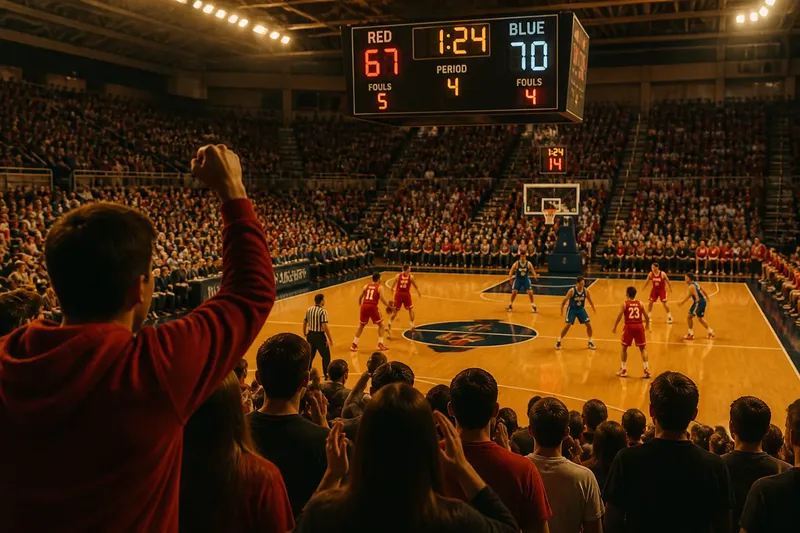
Next, choose one thing to observe that sits outside your usual focus. At a basketball game, you might follow how defenders shift when the ball moves to the opposite side. At a tennis match, you might notice where the receiver stands on second serves. Keep the task small enough that you can still follow the main contest.
It also helps to identify what you do not know. If you are unfamiliar with a rule, a team’s tactical plan or a judging convention, treat your first impression as provisional. Watching closely can tell you what happened; it may not tell you why a decision followed.
What should you watch during the contest?
Try this sequence during play:
- Pick an unglamorous detail. Follow off-ball movement, spacing or a player’s positioning while the crowd watches the ball.
- Separate the event from the reaction. Notice what you saw before the cheering, booing or conversation began.
- Look for the lead-up. After a penalty, turnover or scoring chance, briefly trace the actions that preceded it.
- Switch your point of attention. Watch a different player, area of the court or part of the field for a short spell.
- Hold your judgement open. If your first response is strong, ask what further view or context might change it.
Say you are watching a football match with friends who support the home side, and they react angrily to a foul given near the touchline. You could first note the challenge you actually saw, then watch the restart and the players’ positions rather than joining the argument at once. The observable result is not that you become impartial; it is that your view includes the incident and what followed, instead of only the group’s reaction.
How can you tell the crowd is shaping your view?
Listen for moments when the same event receives different descriptions from different sections of the ground. One group may call a tackle determined; another may call it reckless. The difference can reveal which details each group is attending to, such as the force of contact, the player’s position or the consequences.
Notice your own changes of attention, too. If you watch the referee more closely after a disputed call, or expect a player to fail after one mistake, those are signs that an earlier moment is directing the next one. You can return your focus to the wider pattern without pretending the earlier moment did not matter.
Seat position and company matter in less dramatic ways. A view from high in the stands can make team shape easier to read, while a low seat may make pace and contact more vivid. Friends may draw your attention to a tactical detail; a loud nearby section may make it difficult to hear the official announcement. Your surroundings are part of the viewing experience, not an inconvenience to be mentally edited out.
How do you discuss a match without claiming perfect neutrality?
Describe what you observed before assigning motive. “The defender arrived after the pass” is more open to scrutiny than “the defender wanted to stop the attack at any cost”. When you are unsure, say which detail you missed. That is more useful than presenting a confident interpretation as a plain fact.
You can also ask someone else what they were watching when they formed their view. A supporter behind the goal may have seen a goalkeeper’s positioning; someone following a forward may have noticed a run that pulled a defender out of place. Comparing attention can make the match larger, not merely produce a compromise between opinions.
Why is the neutral spectator myth worth questioning?
Can a supporter watch a match fairly?
Yes, if fairness means being willing to notice evidence that does not suit your side. Loyalty can shape your response without making every observation worthless.
Does sitting among rival supporters make you neutral?
No. It changes which reactions surround you, but you still bring expectations and habits of attention. A different crowd is a different influence, not an empty one.
Should you ignore the crowd to judge a decision?
Not necessarily. The crowd can alert you to an incident or reveal how a moment is being interpreted, but its volume does not establish what happened.
What is the simplest way to notice your bias?
Ask what you were watching just before your judgement formed, then ask what was happening elsewhere. That small pause often exposes the missing part of the picture.
The neutral spectator is a useful ideal only if it reminds you to look again, rather than claiming you have escaped influence. At your next match, choose one stretch of play to watch away from the ball. You may still leave with a side, a favourite player and a strong opinion; you will have a better sense of how the match earned it.